
Simulated Process Screen Printing
An image is separated into several opaque inks to reproduce photography and gradients with screen printing, even on dark garments.
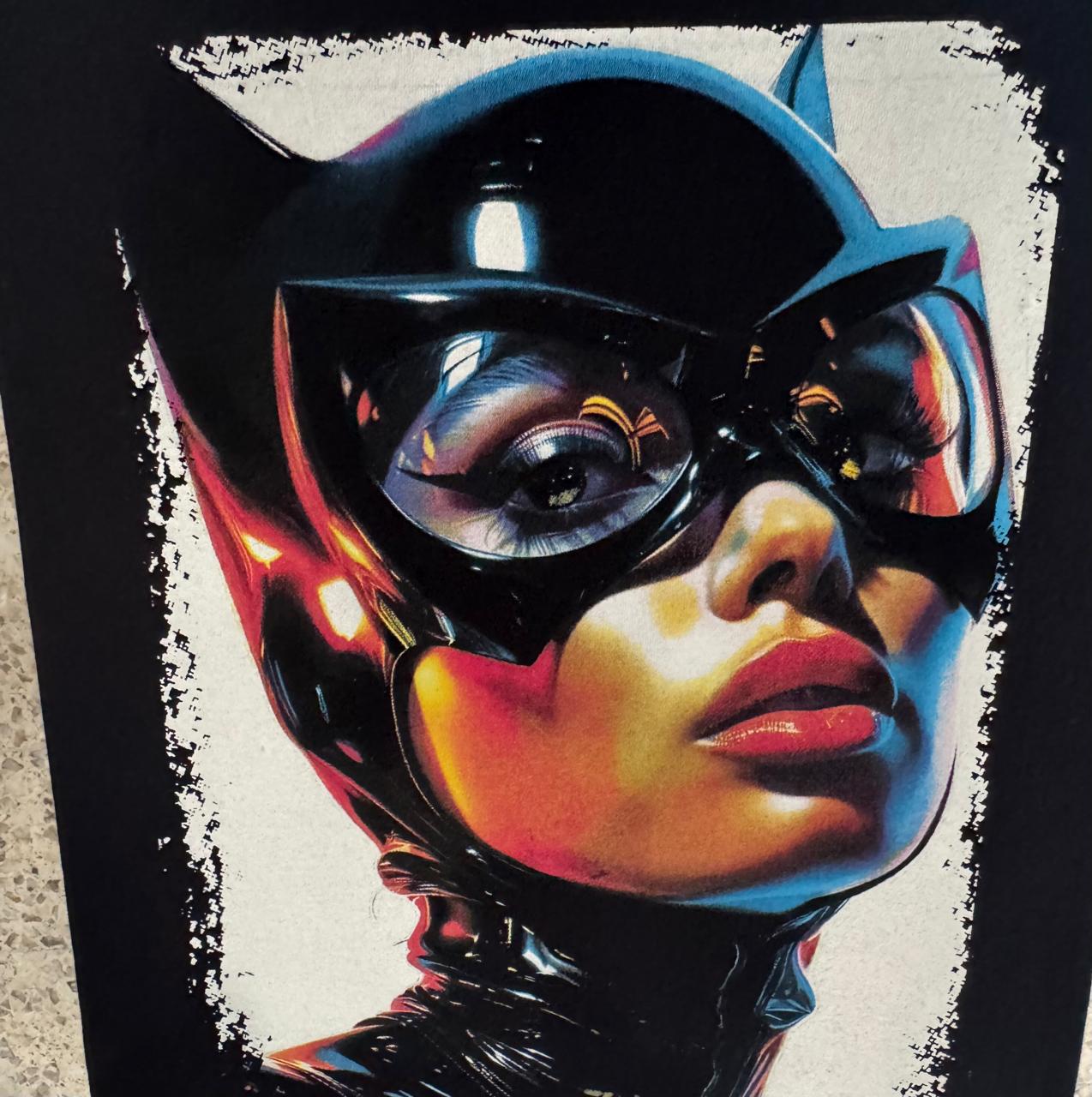
What is simulated process screen printing
Instead of transparent CMYK, simulated process separates the image into solid, opaque inks by color channel and prints them in sequence with halftones.
- Reproduces photography, illustration and gradients
- Works on dark garments because it uses opaque inks
- Custom color separation for every image
- Typically 4 to 8 colors depending on the artwork
- Printed on automatic screen printing presses to hold registration
- Delivers strong color depth and contrast
When it's the right choice
The right technique when artwork can't be reduced to flat spot colors.
Artist merch
Album art, portraits and continuous-tone illustration.
Graphic collections
Complex artwork with gradients and shading.
Visual campaigns
Reproducing campaign imagery on apparel.
Detailed illustration
Artwork with many color transitions.
Dark garments
Photo-realistic imagery without losing saturation on black fabric.
Special editions
Pieces where the print itself is the centerpiece.
Technical considerations
Requirements and considerations before production.
- High-resolution artwork required, minimum 300 dpi at print size
- The final ink count is set after color separation
- Requires precise registration; initial setup takes more time
- Approved on the finished garment, not on screen
- Tones can vary slightly from the monitor preview
- Costs more than one- or two-color artwork due to the number of screens
Production capacity
Scalable production
Automatic, manual and semi-automatic equipment lets us match the process to the artwork, the run size and the characteristics of each garment.
See production capacityOther techniques
Puff Screen Printing
See how the technique works, where it fits and what production requires.
View serviceHigh-Density Printing
See how the technique works, where it fits and what production requires.
View serviceDischarge Printing
See how the technique works, where it fits and what production requires.
View serviceFrequently asked questions
How is this different from CMYK four-color process?
CMYK uses four transparent inks and works well on light garments. Simulated process uses opaque inks separated by channel, which lets us print on dark garments.
What kind of file do you need?
A high-resolution file at true print size, ideally with separated layers and without heavy compression.
How many colors will my design need?
That's set during color separation — typically 4 to 8, depending on the tonal range of the image.
Will the color match my screen exactly?
We aim for the closest possible match, but ink on fabric has a different range than a monitor. That's why we approve a physical sample first.
Can it be combined with specialty finishes?
Yes. High-density, foil or metallic ink can be added to specific elements of the design.
Quote simulated process screen printing
Share quantity, product and artwork so we can review feasibility and quote your run.
Get a quote for simulated process screen printing
Send us the artwork and quantity and we'll confirm whether the technique fits your product.